Hybrid Events That Don’t Feel Halfway
Hybrid Isn’t the Problem. Complexity Is.
Hybrid events have come a long way—but for many planners, they still feel like twice the work for unclear return.
Too often, hybrid becomes:
- Overbuilt
- Overproduced
- Over budget
But it doesn’t have to be that way.
The most successful hybrid events aren’t the most complex, they’re the most intentional
Here’s a simplified framework we use to help clients deliver strong experiences both in the room and beyond it.
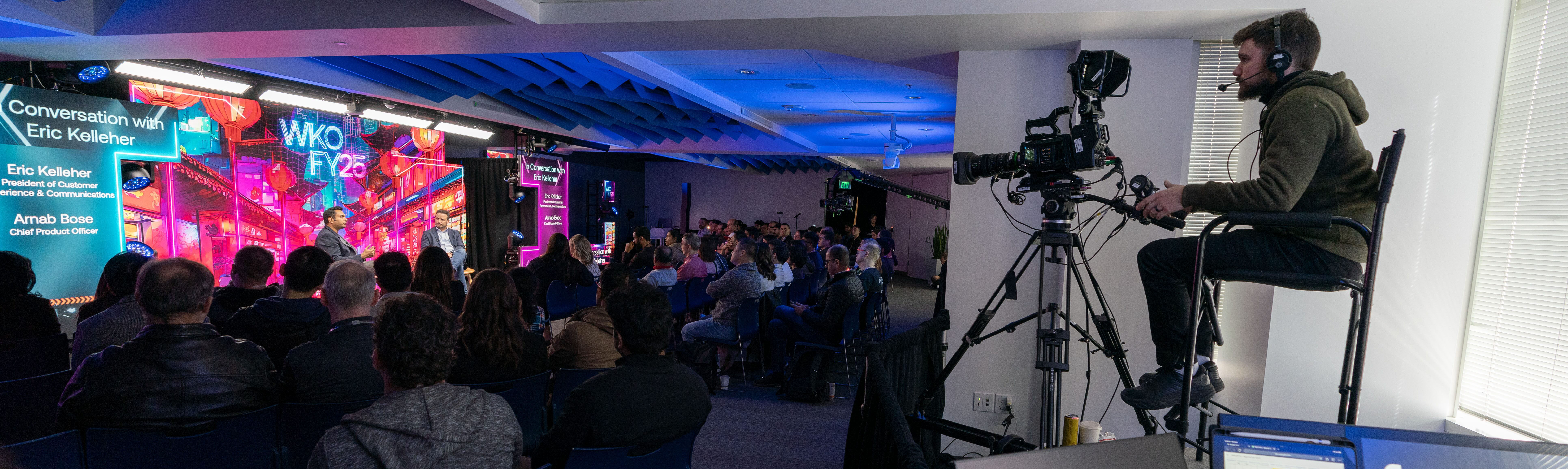
Layer 1: Capture It Right
Everything starts with how you capture the content.
Not every session needs the same level of production, but every session should be intentional.
Best practices:
- Match your camera plan to the format
- Single camera: panels, breakouts
- Multi-camera: keynotes, general sessions
- Pull a direct audio feed for clean, broadcast-quality sound
- Assign clear communication roles between tech, producers, and presenters
- When capture is done right, everything downstream gets easier.
Layer 2: Engage the Remote Audience
Remote viewers don’t need a second show—they need a clear, connected experience.
Keep it simple and purposeful.
What works:
- Light-touch engagement tools (polls, Q&A, moderated chat)
- Coaching presenters for on-camera delivery and pacing
- Consistent lower-thirds and graphics to guide viewers
You’re not recreating the room...you’re extending it.
Layer 3: Extend the Value
This is where hybrid really pays off.
The event doesn’t end when the room clears.
Maximize your content:
- Record sessions for on-demand access
- Clip 30–60 second highlights for social
- Repurpose content into recap emails or internal communications
One event can fuel weeks of meaningful engagement, if you plan for it.
Choosing the Right Platform
The platform you use should support your event, not complicate it.
Today’s hybrid events are powered by a range of tools, including platforms like Zoom, Microsoft Teams, Cvent Attendee Hub, Hopin, and custom or production-supported environments like MVS Summit Events.
Each has its strengths depending on the type of event, audience size, and level of production required.
The key is choosing a platform that integrates smoothly with your production plan and supports the experience you’re trying to create, not one that adds unnecessary layers of complexity.
Practical Cost Savers
Hybrid doesn’t have to double your budget.
In fact, done right, it can be highly efficient.
- Batch your streaming setups across multiple rooms
- Stagger session times to reuse crews and gear
- Focus on streaming the sessions that actually matter
- Build smart redundancy (like backup internet for key sessions)
It’s about being strategic—not scaling everything.
A Simple Hybrid Timeline
T-14 Days: Presenter tech checks + finalize run of show
T-7 Days: Upload slides, videos, and assets
Show Day: Assign moderation roles + launch engagement early
+3 Days: Share on-demand sessions
+14 Days: Send recap content + highlight clips
The Bottom Line
Hybrid events shouldn’t feel like a compromise.
When approached with the right strategy, they become a multiplier—extending reach, increasing engagement, and delivering more value from every event.
Planning a hybrid event? Let’s build a version that actually works. Need help simplifying your hybrid setup? We can guide you toward the right approach, and the right tools, for your event.


Let’s Create Something Incredible
Have a vision you’re ready to bring into focus? We’d love to help make your next event seamless, impactful and unforgettable. Let’s connect and turn your idea into something incredible.